E-commerce is all about speed, reliability, and convenience. Customers expect to order today, receive quickly, be neatly packaged, and have an easy return process. This is exactly where e-commerce fulfillment comes into play.
E-commerce fulfillment is the logistical foundation of every successful online store. It ensures that orders are not only sold but also delivered accurately and on time to the customer. For growing online stores, outsourcing fulfillment is often the step that enables further growth.
What is e-commerce fulfillment?
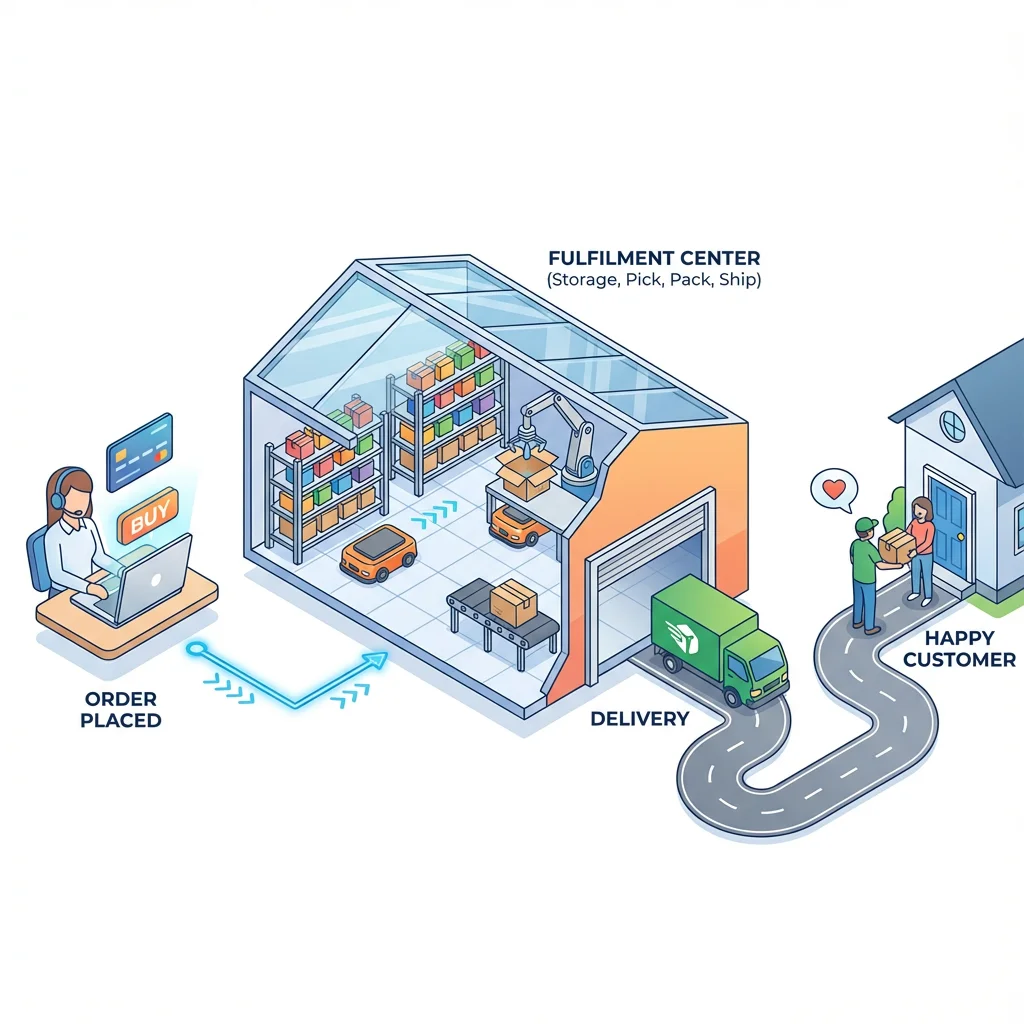
E-commerce fulfillment encompasses all logistical processes that take place after an online order is placed. Think of:
- storage of products
- inventory management
- order processing
- picking and packing
- shipping
- return handling
A fulfillment partner takes over these tasks completely, allowing you to focus on marketing, sales, and customer relationships.
What does fulfillment involve in e-commerce?
In e-commerce, fulfillment is much more than just sending boxes. It is a well-organized process where speed and accuracy are central.
Specifically, e-commerce fulfillment means:
- automatically receiving orders from your online store
- real-time inventory management across multiple sales channels
- fast order processing
- consistent delivery, even during peak times
- professional handling of returns
Good fulfillment ensures that your e-commerce operation grows without getting bogged down in logistics.
What exactly does e-commerce fulfillment do?
In practice, e-commerce fulfillment consists of the following components:
- Goods receipt Products are received, checked, and registered.
- Storage and inventory management Inventory is stored in an organized manner and is visible in real-time.
- Order processing Orders come in automatically via your online store or marketplace.
- Order picking The right products are gathered per order.
- Packaging (pick and pack) Orders are neatly packaged, possibly with branding or inserts.
- Shipping Orders are shipped with tracking.
- Return processing Returns are checked and processed back into inventory.
This process runs continuously, even while you sleep or focus on growth.
The 7 steps of e-commerce order fulfillment
A standard e-commerce fulfillment process looks like this:
- Customer places an order
- Order comes in automatically
- Products are picked
- Order is packaged
- Shipping label is created
- Package is shipped
- Any returns are processed
The better these steps align, the higher the customer satisfaction.
Why outsource e-commerce fulfillment?
Many e-commerce entrepreneurs find that logistics is becoming increasingly complex. Outsourcing offers clear advantages:
- Faster delivery Professional processes and late cut-off times.
- Scalability Process more orders without additional staff.
- Fewer errors Standardized processes ensure reliability.
- Lower fixed costs No need for your own warehouse or logistics team.
- Focus on growth More time for marketing, product range, and customers.
What does e-commerce fulfillment cost?
The costs of e-commerce fulfillment are made up of several components:
- receiving costs for inventory
- storage costs per pallet or location
- pick and pack costs per order
- shipping costs per package
- return costs per return shipment
On average, pick and pack costs range between €2 and €4 per order, excluding storage and transport. With higher volumes, the costs per order often decrease.
It is important that the costs are transparent and align with your order profile.
What is the difference between dropshipping and e-commerce fulfillment?
This difference often causes confusion:
- Dropshipping The supplier ships directly to the customer. You have little control over delivery time, quality, and packaging.
- E-commerce fulfillment You have inventory, but it is with a fulfillment partner. This allows for faster delivery, more control, and better margins.
Many online stores use dropshipping to start and switch to fulfillment as they grow.
What types of e-commerce are there?
E-commerce fulfillment is used in various models, such as:
- B2C e-commerce
- B2B e-commerce
- D2C (direct to consumer)
- Marketplace sales (Bol.com, Amazon)
- Multichannel e-commerce
A good fulfillment partner can support all these models from one central system.
Who is e-commerce fulfillment suitable for?
E-commerce fulfillment is interesting for:
- growing online stores
- brands with regular orders
- online stores that want to deliver faster
- entrepreneurs looking to outsource logistics
- companies that want to ship internationally
Whether you are just scaling up or already handling volumes, fulfillment grows with you.
E-commerce fulfillment at Smart Fulfillment
At Smart Fulfillment, we organize e-commerce fulfillment in a way that supports your growth. We think along about processes, peaks, shipping options, and scalability.
What you can expect from us:
- fast and reliable order processing
- real-time insight into inventory and orders
- integrations with online stores and marketplaces
- scalable fulfillment solutions
- personal contact and support
Ready to manage your e-commerce fulfillment smartly?
E-commerce fulfillment is not a side issue, but an essential part of a successful online store. By outsourcing fulfillment, you create peace of mind, clarity, and room to grow.
Want to know what e-commerce fulfillment costs and delivers in your situation? Contact us for a non-binding quote. Together we will look at your volumes, products, and growth plans.